



Uganda–DR Congo Joint Offensive Targets Rebel Networks
 admag_adminApril 30, 20262 Mins read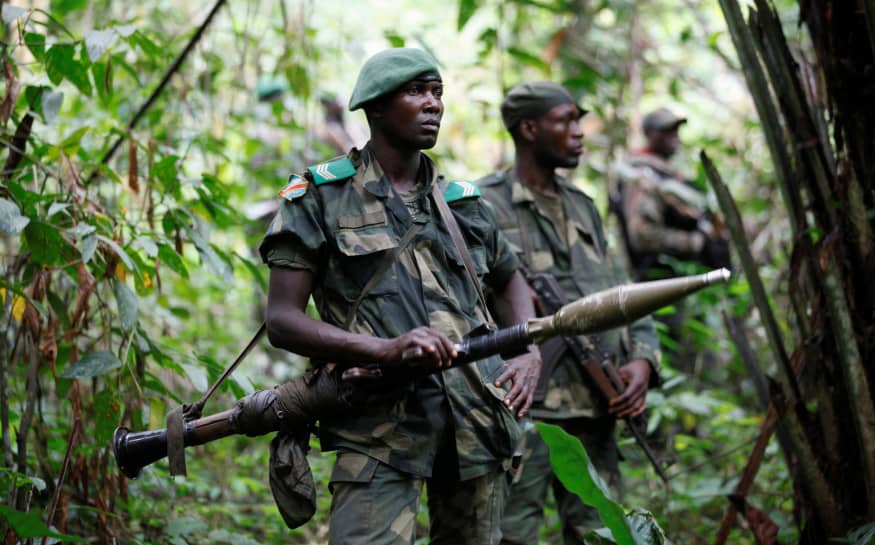
Uganda and the Democratic Republic of the Congo are intensifying joint military operations against insurgent violence in eastern Congo as Operation Shujaa grows into one of the region’s most important cross-border counterterrorism efforts.
Launched in November 2021, Operation Shujaa is a coordinated offensive by the Uganda People’s Defence Force and the Armed Forces of the Democratic Republic of the Congo. The operation was created to target the Allied Democratic Forces and militants linked to the Islamic State Central Africa Province, both of which have operated in the conflict-prone provinces of North Kivu and Ituri.
Since its launch, the joint mission has weakened rebel networks, destroyed militant camps, and disrupted insurgent operations that have threatened communities in eastern Congo and posed security risks to Uganda. Joint forces have also confronted other armed factions active in the region, expanding the operation’s role in stabilisation efforts.
The roots of the ADF insurgency date back to 1996, when the group was formed through a merger of Ugandan rebel factions opposed to the government of Yoweri Museveni. Although the group initially targeted Uganda, it later established strongholds in eastern Congo, where weak governance and long-running conflict created fertile ground for insurgent activity.
Over time, the ADF evolved from a rebel movement into a violent extremist organisation. In 2019, its leader, Musa Baluku, pledged allegiance to the Islamic State, integrating much of the group into the Islamic State’s Central Africa Province. This alliance strengthened the group’s capabilities and expanded the scale of its attacks in both Uganda and eastern Congo.
The immediate trigger for Operation Shujaa came in late 2021, after ADF-linked militants carried out bomb attacks in Kampala. In response, President Museveni and Félix Tshisekedi agreed to launch a coordinated military campaign aimed at dismantling insurgent bases and restoring security.
The operation has since produced major military gains. Joint forces have dismantled camps, disrupted supply routes, eliminated senior commanders, and rescued abducted civilians. Ugandan authorities say these efforts have sharply reduced the operational strength of the ADF.
The campaign gained renewed momentum in early 2026 after fresh attacks in eastern Congo. Joint forces launched additional offensives targeting militant hideouts and forest-based supply networks in North Kivu and Ituri, where insurgents continue to regroup despite earlier setbacks.
Military cooperation between Uganda and the DRC has also expanded beyond combat operations. Both countries have strengthened intelligence sharing, improved surveillance coordination, and tightened border security to prevent insurgents from rebuilding their networks.
At the same time, the two governments are investing in cross-border infrastructure projects, including strategic roads designed to improve trade and enable faster troop movement in insecure areas. This dual approach reflects an understanding that lasting security depends not only on military pressure but also on stronger economic connectivity.
Despite these gains, eastern Congo remains highly unstable. Dozens of armed groups continue to compete for territory, mineral resources, and political influence, making it difficult to achieve long-term peace. Human rights organisations have also called for stronger civilian safeguards to ensure military operations do not worsen humanitarian conditions.
Even with these challenges, Operation Shujaa demonstrates growing regional recognition that transnational insurgent threats require coordinated action. For Uganda, dismantling ADF-linked networks remains central to national security. For the DRC, restoring order in the east is vital for economic recovery and political stability.
As extremist threats continue to evolve across Central Africa, Operation Shujaa is emerging as a significant model of regional military cooperation. Its long-term outcome may influence how neighbouring states confront cross-border insurgency in the future.
- Africa Defence
- African Armed Forces
- African Security Challenges
- Border security
- Counterterrorism in Africa
- Defence Cooperation
- Defence Industry
- Defence News Africa
- Defence Policy
- Defence Technology
- Military Alliances
- Military Equipment This comm
- military intelligence
- Military Modernization
- Military Strategy
- Military Training
- National Security
- Peacekeeping Operations
- Regional Security
- Security in Africa
Related Articles
Nigeria’s Intelligence Offensive: Strengthening Regional Defences Against Bandit Networks
Across Nigeria’s forests, rural highways, and fragmented border regions, a new form...

Ethiopia’s Defence Upgrade: Reinforcing Air Power Against Emerging Threats and Redefining Regional Deterrence
Ethiopia is entering a decisive phase in its military transformation, placing renewed...
Mozambique’s Energy Shield: Defending LNG Assets Against Insurgent Threats
Mozambique is intensifying efforts to protect its growing liquefied natural gas (LNG)...


Somalia’s Security Reset: Reforming Forces, Crushing Extremism
Somalia is entering a decisive phase in its long struggle for stability,...

Leave a comment