




Nigeria’s Intelligence Offensive: Strengthening Regional Defences Against Bandit Networks
 admag_adminApril 29, 20263 Mins read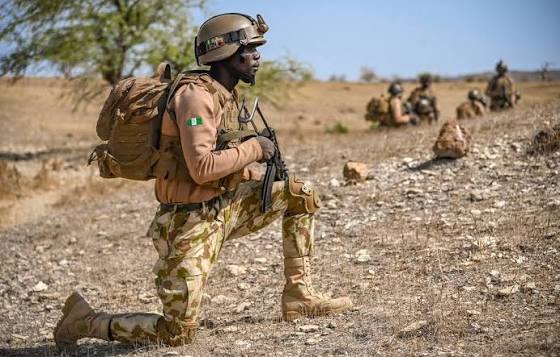
Across Nigeria’s forests, rural highways, and fragmented border regions, a new form of conflict is unfolding—less visible than conventional warfare, but increasingly central to national stability. It is an intelligence-led campaign against evolving bandit networks that have grown from loosely organised criminal groups into structured, adaptive threats with expanding regional reach.
At the centre of this shift is a quiet but important recalibration of Nigeria’s security approach. Rather than relying solely on large-scale military deployments, the state is increasingly investing in intelligence integration, surveillance technology, inter-agency coordination, and community-based information systems. The objective is to detect and disrupt bandit networks before attacks occur.
For years, armed groups operating across Zamfara, Katsina, Kaduna, Sokoto, and Niger states have carried out kidnappings, highway ambushes, and rural raids, displacing thousands and disrupting agricultural activity. What began as opportunistic violence has evolved into a more structured security ecosystem, complete with recruitment channels, funding networks, and cross-border mobility extending into the wider Sahel.
In response, Nigeria’s key security institutions—the Armed Forces, Nigeria Police Force, and Department of State Services (DSS)—are increasingly operating within integrated intelligence frameworks. The focus has shifted from reaction to anticipation: mapping networks, tracking communications, and identifying logistical routes used by armed groups.
This transformation is most visible in the expansion of joint operational command centres and intelligence fusion units. These platforms combine human intelligence, intercepted communications, aerial surveillance, and community reports to generate real-time operational insights. As a result, security responses are becoming increasingly guided by predictive intelligence rather than post-incident deployment.
Air surveillance now plays a central role in this strategy. Reconnaissance aircraft and drone systems are deployed to monitor forest corridors and remote settlements that previously served as safe havens. These tools help track movement patterns, identify camps, and support faster, more coordinated ground operations.
However, technology alone does not define the strategy. One of the most significant developments has been the formal integration of local intelligence networks into national security operations. Traditional leaders, vigilante groups, and rural informants now contribute structured intelligence on suspicious movements and potential threats. In areas with limited state presence, this community layer has become essential.
The challenge, however, continues to evolve. Bandit groups have adapted by dispersing into dense forest belts such as Rijana and Kamuku, shifting across state boundaries, and embedding themselves within civilian populations to avoid detection. Their deep familiarity with terrain and informal supply networks has increased their resilience against conventional military pressure.
Kidnapping for ransom has also become a core operational model for many groups, sustaining a parallel economy of violence that places heavy pressure on rural communities. Schools, highways, and farming settlements remain frequent targets, disrupting education and agricultural production across affected regions.
Beyond direct operations, Nigeria is also targeting the financial systems that sustain these networks. Security agencies are working to trace ransom flows, illegal mining revenues, and informal trading channels that often fund armed groups. The aim is to weaken operational capacity by cutting off financial lifelines.
There is also growing recognition that the challenge is no longer purely domestic. Porous borders across the Sahel, Niger Basin, and Lake Chad region enable the movement of weapons, fighters, and illicit goods. This has strengthened Nigeria’s cooperation with neighbouring states in broader regional intelligence and security frameworks.
Despite these advances, analysts caution that military and intelligence gains alone may not ensure lasting stability. Persistent rural poverty, youth unemployment, weak governance structures, and unresolved land disputes continue to create conditions that enable recruitment and regeneration of armed groups.
Still, the shift underway is significant. Nigeria is steadily building a more integrated security model—one that combines intelligence gathering, surveillance technology, regional cooperation, and community engagement into a unified operational system.
The implications extend beyond Nigeria. As West Africa confronts increasingly decentralised and adaptive security threats, Nigeria’s evolving intelligence approach is being closely observed as a potential model for regional defence in an era defined by networked violence.
In this emerging landscape, success will not be determined by firepower alone, but by information advantage, coordination, and the ability to anticipate threats before they fully materialise.
- African Security
- Bandit Networks
- Counter Banditry
- Counterinsurgency
- Defence Policy
- Defence Strategy
- Geopolitics
- Here are 20 strong
- Intelligence Offensive
- Internal Security
- military intelligence
- National Security
- Nigerian Intelligence
- Regional Defences
- Regional Security
- Regional Stability
- relevant tags for your post
- Security Architecture
- Security Forces
- Security Operations
- separated by commas: Nigeria Defence
- Strategic Deterrence

Related Articles

Ethiopia’s Defence Upgrade: Reinforcing Air Power Against Emerging Threats and Redefining Regional Deterrence
Ethiopia is entering a decisive phase in its military transformation, placing renewed...
Mozambique’s Energy Shield: Defending LNG Assets Against Insurgent Threats
Mozambique is intensifying efforts to protect its growing liquefied natural gas (LNG)...
Somalia’s Security Reset: Reforming Forces, Crushing Extremism
Somalia is entering a decisive phase in its long struggle for stability,...



Nigeria’s North-West Offensive: Restoring Security and Reclaiming Communities
Nigeria’s North-West has remained one of the country’s most fragile security zones...

Leave a comment