


MILITARY HISTORY – PEACE ENFORCEMENT MISSIONS IN AFRICA
 admag_adminApril 17, 20263 Mins read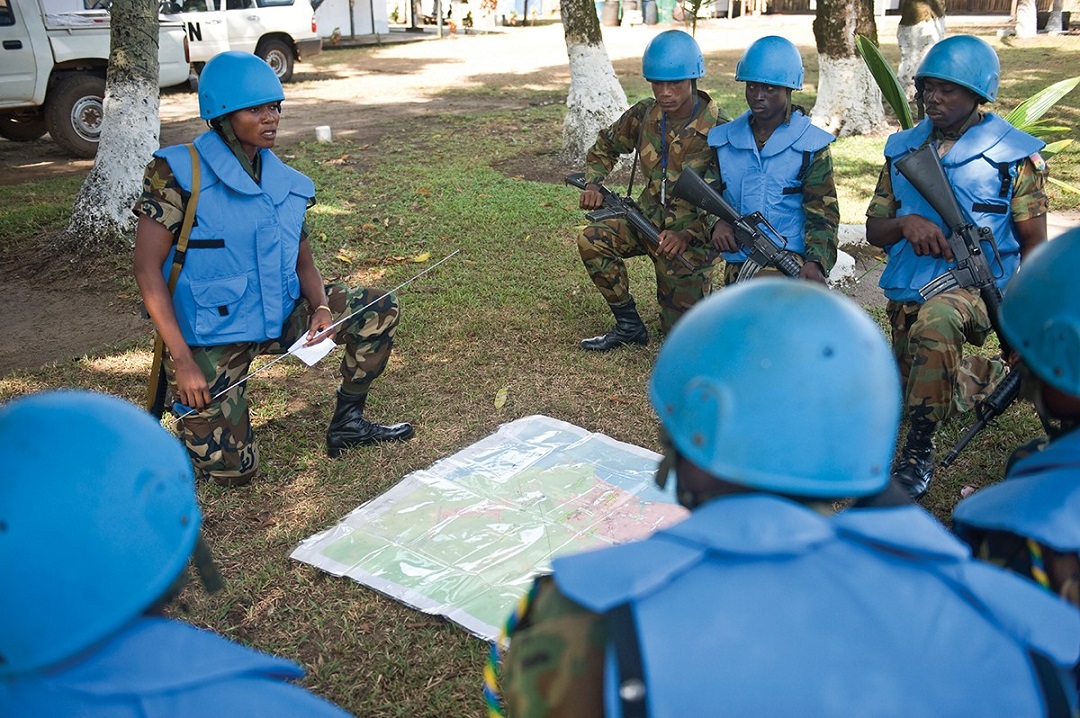
Since the end of the Cold War, Africa has become the principal arena for a more forceful model of international intervention: peace enforcement. Unlike traditional peacekeeping which depends on the consent of warring parties and limits force largely to self-defense peace enforcement operations are authorized under Chapter VII of the UN Charter and permit the use of “all necessary means” to restore order, even when no ceasefire exists. From Somalia’s collapse to insurgencies in the Sahel and militia violence in eastern Congo, these missions have confronted some of the continent’s most entrenched conflicts. Increasingly, African forces have led them, reflecting a broader shift toward regional responsibility for security.
The United Nations first experimented with enforcement in Africa during the Congo Crisis of the 1960s. The UN Operation in the Congo (ONUC) moved beyond observation and engaged in combat against secessionist forces. The mission proved controversial and costly; Secretary-General Dag Hammarskjöld died in a plane crash during the crisis. While ONUC ultimately preserved Congo’s territorial integrity, it exposed the political sensitivities and operational risks of robust UN intervention.
Three decades later, Somalia became another watershed. After the Somali state collapsed in 1991, famine and warlord violence triggered international involvement. The UN Operation in Somalia II (UNOSOM II), launched in 1993, was mandated not only to protect humanitarian relief but also to disarm factions by force. Confrontations with militia leader Mohamed Farah Aidid escalated into the 1993 Battle of Mogadishu. The deaths of 18 U.S. soldiers and graphic media coverage eroded political support, and international forces withdrew by 1995. Somalia underscored a central lesson: enforcement missions require sustained political commitment and realistic objectives, not just military capability.
Where the UN grew cautious, regional organizations often acted more decisively. In 1990, the Economic Community of West African States (ECOWAS) deployed its Monitoring Group (ECOMOG) into Liberia’s civil war. Nigerian-led forces conducted offensive operations to prevent rebel takeovers and stabilize Monrovia, later intervening in Sierra Leone in 1997 to restore the elected government after a coup. Though criticized for logistical weaknesses and uneven discipline, ECOMOG demonstrated that African states were prepared to enforce stability without waiting for major-power consensus.
The establishment of the African Union (AU) in 2002 formalized this shift. Replacing the doctrine of non-interference with one of “non-indifference,” the AU asserted the right to intervene in cases of genocide, war crimes, or crimes against humanity. Early missions in Burundi and the Central African Republic deployed quickly and later transitioned to UN operations, highlighting Africa’s emerging role as a first responder in crises.
The African Union Mission in Somalia (AMISOM), launched in 2007 and later reconfigured as ATMIS, represents the most sustained example of African-led enforcement. At its height, the mission fielded over 20,000 troops from Uganda, Burundi, Kenya, Ethiopia, and others. Engaged in prolonged combat against al-Shabaab, AMISOM helped push militants out of Mogadishu and other key urban centers, supported successive political transitions, and enabled the rebuilding of core state institutions.
The UN adapted its own approach in the Democratic Republic of Congo. In 2013, the Security Council authorized a Force Intervention Brigade within MONUSCO the first UN unit explicitly mandated to conduct offensive operations against armed groups. Composed of troops from South Africa, Tanzania, and Malawi, the brigade played a decisive role in defeating the M23 rebellion that year. Its creation marked a doctrinal shift, signaling that impartial monitoring alone was insufficient when armed groups actively threatened civilians.
Despite tactical gains, peace enforcement missions face persistent challenges. Funding shortfalls often leave AU operations dependent on external donors. Casualties strain troop-contributing countries, and allegations of misconduct have at times undermined local legitimacy. Most critically, military victories can prove temporary where governance remains weak and political reconciliation incomplete. Recent UN drawdowns in Mali and the planned withdrawal from Congo reflect both shifting global priorities and the limits of prolonged external engagement.
Over three decades, Africa has evolved from being primarily a recipient of international peacekeeping to a central architect of enforcement missions. While force alone cannot resolve deep-rooted political crises, the continent’s experience has reshaped global debates about sovereignty, civilian protection, and regional responsibility. Africa’s peace enforcement record is neither flawless nor final, but it represents a determined effort to ensure that stability is increasingly secured by those most directly affected by conflict.
- Africa conflict resolution
- African Union non-indifference doctrine
- African Union security architecture
- African-led security operations
- AMISOM Somalia
- ATMIS transition
- AU peace missions
- Battle of Mogadishu 1993
- Challenges of peace enforcement
- Civilian protection Africa
- conflict
- ECOWAS ECOMOG Liberia
- M23 rebellion Congo
- MONUSCO Force Intervention Brigade
- ONUC Congo Crisis
- Peace enforcement in Africa
- Regional responsibility for peace
- Sierra Leone intervention
- Sovereignty and intervention debates
- UN peacekeeping history
- UNOSOM Somalia

Related Articles
GLOBAL SECURITY WATCH: THE ACCELERATING MILITARISATION OF OUTER SPACE
Outer space has shifted from a largely scientific and commercial environment into...
AFRICAN MILITARY LEADERS FORGE NEW ALLIANCES: THE EVOLUTION OF CHIEFS OF DEFENCE CONFERENCES ABUJA, NIGERIA
In the conference halls of Nairobi and Abuja in 2025, Africa’s top...
GENDER MAINSTREAMING POLICIES IN AFRICAN ARMED FORCES
Across Africa, women are steadily gaining ground in armed forces long dominated...


BEST DEFENCE POLICY PAPERS ON AFRICA IN THE LAST DECADE
Between 2016 and 2026, defence policy thinking on Africa shifted in response...

Leave a comment