



AFRICAN MILITARY LEADERS FORGE NEW ALLIANCES: THE EVOLUTION OF CHIEFS OF DEFENCE CONFERENCES ABUJA, NIGERIA
 admag_adminApril 17, 20263 Mins read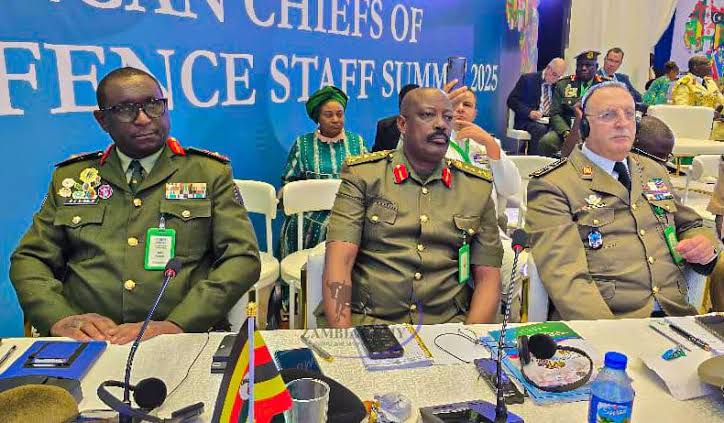
In the conference halls of Nairobi and Abuja in 2025, Africa’s top military leaders met not merely to exchange briefings, but to redefine how the continent approaches security cooperation. Two major gatherings the U.S.-partnered African Chiefs of Defense Conference and a newly launched African-led summit highlighted a pivotal shift: African states are asserting greater ownership of their defence agenda while recalibrating global partnerships.
The African Chiefs of Defense Conference (ACHOD), launched in 2017 by United States Africa Command (AFRICOM), has evolved into a key annual forum for strategic dialogue between African militaries and the United States. For several years, the conference was held outside Africa. That changed in 2024, when Botswana co-hosted the event in Gaborone the first time it convened on African soil.
In May 2025, Kenya hosted ACHOD in Nairobi, bringing together chiefs of defence from roughly three dozen African countries alongside senior U.S. military leaders. Discussions focused on transnational threats: terrorism, maritime insecurity, cyber risks, and destabilising external interference. The tone underscored “African-led solutions,” supported by technical and operational partnerships.
Delegates endorsed deeper intelligence-sharing, joint operations against extremist networks, and expanded training cooperation. Organisers also linked security to industrial policy, hosting a defence exhibition to encourage African production capacity and private-sector engagement. Plans were set in motion to make the summit an annual event and to align it more closely with African Union security mechanisms.
The summit drew global attention, including participation from the United Nations. Deputy Secretary-General Amina Mohammed warned that parts of Africa continue to experience some of the world’s highest levels of terrorism-related violence, particularly in the Central Sahel. She stressed that security and development are inseparable: instability disrupts education, weakens governance, and fuels recruitment into armed groups.
Taken together, ACHOD and ACDSS illustrate two complementary tracks in Africa’s evolving security architecture. The Nairobi forum strengthened U.S. Africa defence ties and formalised shared priorities, while the Abuja summit signalled a confident assertion of continental agency. Rather than competing platforms, they represent parallel efforts addressing the same reality: modern threats from cyber warfare to climate-driven resource tensions transcend borders and demand coordinated responses.
Across both gatherings, defence leaders converged on several themes: the need for interoperable systems, rapid intelligence exchange, youth-focused counter-radicalisation strategies, maritime domain awareness, and reduced overdependence on external security providers. The rhetoric of “African solutions” is increasingly matched by structural proposals for permanent forums and institutionalized cooperation.
As planning begins for future editions of both conferences, Africa’s military leadership appears determined to move from episodic meetings to sustained coordination. The message emerging from Nairobi and Abuja is unmistakable: partnership remains important, but strategic ownership is essential. In an era of shifting global alliances and complex threats, African defence chiefs are not just attending conferences they are laying the foundations of a more self-directed continental security order.
AFRICOM Commander Gen. Michael Langley described the forum as a vital platform to address “layered threats from across the continent.” The Nairobi session also produced one of the conference’s first joint communiqués on shared priorities an indication that ACHOD is moving beyond dialogue toward more formalised cooperation.
Just three months later, the centre of gravity shifted to West Africa. From 25–27 August 2025, Nigeria hosted the inaugural African Chiefs of Defence Staff Summit (ACDSS) in Abuja. Organised entirely by the Nigerian Armed Forces under Chief of Defence Staff Gen. Christopher Musa, the summit was widely described as the first continent-wide gathering of defence chiefs convened solely as an African initiative.
Participation figures varied, but dozens of African nations were represented. Unlike ACHOD’s partnership framework, the Abuja summit emphasised indigenous strategy, defence industrial development, and institutional self-reliance. Its theme “Combating Contemporary Threats to Regional Peace and Security in Africa: The Role of Strategic Defence Collaboration” framed candid discussions on terrorism, violent extremism, cybercrime, maritime insecurity in the Gulf of Guinea, and porous borders across the Sahel and Horn of Africa.
Opening the summit on behalf of President Bola Tinubu, Vice President Kashim Shettima proposed establishing a permanent African Chiefs of Defence Staff Forum to institutionalise dialogue, strategic foresight, and operational coordination. The proposal reflected a broader ambition: embedding military collaboration within continental frameworks rather than relying primarily on external conveners.
- Abuja defence summit 2025
- AfCFTA
- Africa
- African Chiefs of Defence Staff Summit
- African Chiefs of Defense Conference
- African continental security architecture
- African defence industry development
- African military collaboration
- African military leadership 2025
- African security cooperation
- African Union
- African Union defence agenda
- African-led security solutions
- AFRICOM
- Counterterrorism in Africa
- Cybersecurity in Africa
- Defence
- Defence exhibitions Africa
- Intelligence sharing Africa
- Maritime security Gulf of Guinea
- Nairobi security summit 2025
- Regional peace and security Africa
- Sahel terrorism challenges
- Strategic defence partnerships
- UN
Related Articles

GLOBAL SECURITY WATCH: THE ACCELERATING MILITARISATION OF OUTER SPACE
Outer space has shifted from a largely scientific and commercial environment into...
MILITARY HISTORY – PEACE ENFORCEMENT MISSIONS IN AFRICA
Since the end of the Cold War, Africa has become the principal...
GENDER MAINSTREAMING POLICIES IN AFRICAN ARMED FORCES
Across Africa, women are steadily gaining ground in armed forces long dominated...


BEST DEFENCE POLICY PAPERS ON AFRICA IN THE LAST DECADE
Between 2016 and 2026, defence policy thinking on Africa shifted in response...

Leave a comment