




BREAKING BARRIERS IN THE LAB: AFRICAN WOMEN ADVANCING DEFENCE SCIENCE AND TECHNOLOGY
 admag_adminApril 21, 20263 Mins read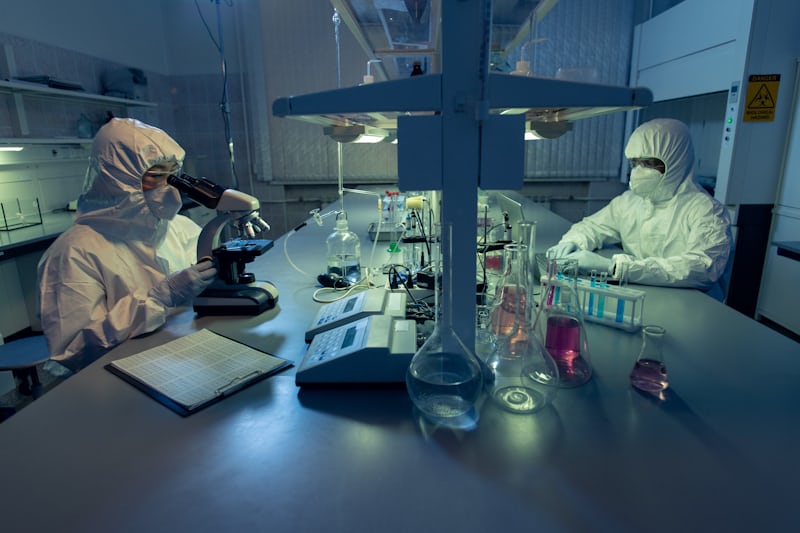
Across Africa, security threats are evolving ranging from insurgencies and maritime crime to cyber intrusions and disinformation. Meeting these challenges requires more than soldiers and equipment; it demands scientific and technological capacity. Within that effort, African women scientists and engineers are playing an increasingly important, though often underrecognized, role. Working in laboratories, universities, state agencies, and private firms, they contribute to innovations that strengthen national resilience and reduce reliance on external suppliers.
South Africa provides one of the clearest examples of women’s participation in defence-related research. Institutions such as Armscor and Denel anchor the country’s defence industrial base. Originally shaped by Cold War and apartheid-era imperatives, these organizations have since repositioned within a democratic framework, supporting aerospace systems, electronics, munitions, and protected mobility. Women engineers and scientists within these institutions contribute to radar development, systems integration, materials testing, and software engineering for the South African National Defence Force. Even as financial and structural challenges affect parts of the sector, female professionals remain integral to sustaining technical expertise and advancing dual-use technologies applicable to both civilian and military contexts.
Beyond traditional defence firms, African women are shaping fields with clear security implications. In materials science and mechanical engineering, researchers are advancing additive manufacturing, composite materials, and nanotechnology. These capabilities support rapid prototyping, lighter protective systems, and resilient components for unmanned platforms. Universities in Nigeria, Kenya, Egypt, and South Africa have seen women scientists lead research teams exploring 3D printing and advanced coatings technologies that can reduce procurement costs and strengthen local supply chains. In regions where importing equipment is expensive and politically sensitive, such innovation supports strategic autonomy.
Space and remote sensing programs offer another avenue of influence. Earth observation satellites developed and operated through national space agencies and university partnerships are used for agriculture and disaster management, but also contribute to border monitoring, maritime awareness, and peace support operations. Women scientists in Ghana, Nigeria, and South Africa work on geospatial analytics, satellite imaging, and data interpretation. Their expertise enhances surveillance of illegal mining, piracy, and wildlife trafficking networks that often intersect with armed groups. Although these projects are frequently framed as civilian initiatives, their security value is significant.
Cybersecurity is another domain where African women are making measurable contributions. As governments digitize services and militaries modernize communications, protecting networks becomes critical. Female researchers and entrepreneurs are active in cryptography, digital forensics, and cyber policy advisory roles. In countries facing election interference or infrastructure attacks, their work supports both democratic governance and defence readiness. Partnerships with global institutions have expanded training opportunities, enabling African specialists to engage in international standards-setting and joint research.
Despite progress, barriers remain. Women are still underrepresented in many engineering and classified research environments, often comprising less than a third of technical personnel in defence-related sectors. Structural obstacles include limited access to advanced laboratories, uneven funding for research institutions, and persistent gender biases in recruitment and promotion. Advocacy networks such as Women in Defence South Africa promote inclusion, mentorship, and procurement opportunities for women-owned enterprises, helping to build a stronger pipeline into defence science careers.
Continental and international initiatives also play a role. Programs supported by the African Development Bank and other regional bodies fund STEM education, research fellowships, and innovation hubs. While many grants target health, climate resilience, or agricultural technology, the technical skills developed data analytics, sensor design, bioengineering are transferable to defence applications. In a global environment marked by supply chain disruptions and technological competition, cultivating domestic expertise becomes a strategic priority.
Diversity in defence science is not simply a matter of representation; it strengthens problem-solving capacity. Researchers who understand local terrain, infrastructure constraints, and social dynamics are better positioned to design cost-effective and context-appropriate technologies. Whether developing secure communications for peacekeeping missions or materials suited to harsh environments, African women scientists contribute practical insight alongside technical skill.
As African states invest in modernizing their defence sectors and expanding research ecosystems, broadening participation will be essential. The next generation of laboratories, start-ups, and space programs will depend on inclusive talent development to remain competitive and innovative. African women in defence science are not symbolic figures; they are engineers, physicists, analysts, and project leaders shaping the continent’s security capabilities. Recognizing and supporting their work strengthens both national defence and the broader scientific landscape on which it depends.
- #AfricanInnovation
- #AfricanScientists
- #AfricanWomenInSTEM
- #AfricanWomenLeaders
- #AfricaRising
- #DefenceInnovation
- #DefenceTechnologyAfrica
- #GenderEqualityInSTEM
- #MilitaryTechnology
- #NextGenInnovators
- #STEMinAfrica
- #STEMLeadership
- #TechForSecurity
- #WomenBreakingBarriers
- #WomenInDefence
- #WomenInEngineering
- #WomenInResearch
- #WomenInScience
- #WomenInSecurity
- #WomenInTechAfrica

Related Articles

GLOBAL SECURITY WATCH: THE ACCELERATING MILITARISATION OF OUTER SPACE
Outer space has shifted from a largely scientific and commercial environment into...
MILITARY HISTORY – PEACE ENFORCEMENT MISSIONS IN AFRICA
Since the end of the Cold War, Africa has become the principal...
AFRICAN MILITARY LEADERS FORGE NEW ALLIANCES: THE EVOLUTION OF CHIEFS OF DEFENCE CONFERENCES ABUJA, NIGERIA
In the conference halls of Nairobi and Abuja in 2025, Africa’s top...


BEST DEFENCE POLICY PAPERS ON AFRICA IN THE LAST DECADE
Between 2016 and 2026, defence policy thinking on Africa shifted in response...

Leave a comment