



THE RISE OF ELECTRONIC SURVEILLANCE IN AFRICAN MILITARIES
 King Richard Igimoh, Group Editor ALOJanuary 8, 20263 Mins read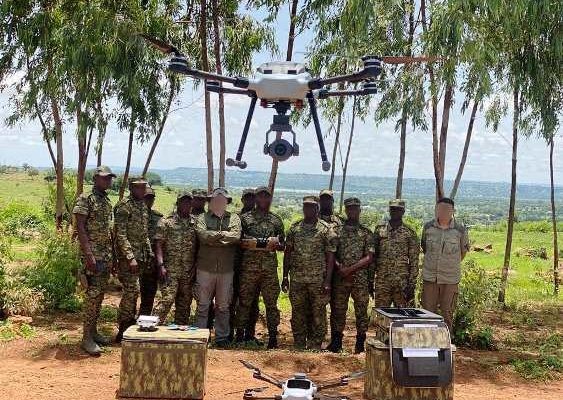
African militaries are rapidly expanding their use of electronic surveillance as they confront insurgencies, cross-border crime, terrorism, and maritime insecurity. From AI-enabled cameras to long-endurance drones and mobile ground radars, these systems are reshaping how intelligence is collected and how force is deployed. At least fourteen African countries now operate AI-driven surveillance platforms, largely sourced from partners such as China, Turkey, Israel, and the United States. The shift reflects a recognition that conventional manpower-heavy approaches are poorly suited to today’s dispersed and technologically adaptive threats.
AI in Modern Surveillance Operations
Artificial intelligence has become central to military surveillance, allowing armed forces to process vast streams of data and identify threats in real time. In Kenya, AI-enabled surveillance systems deployed in Nairobi integrate facial recognition and automated license-plate detection to track extremist networks and organized crime. South Africa employs similar tools in major urban centers to monitor suspected Islamic State affiliates, while in Malawi, the EarthRanger platform—originally developed for conservation—uses AI to distinguish human movement from wildlife, a capability increasingly adapted for border and military monitoring.
Related Articles: TECHNOLOGY TRANSFER: WHAT AFRICA GAINS FROM GLOBAL DEFENCE PARTNERSHIPS
These systems rely on machine learning models that classify images, detect anomalies, and generate alerts faster than human operators. The result is a blurring of boundaries between civilian policing, border control, and military intelligence, raising both operational advantages and governance questions.
Drones and Persistent Aerial Surveillance
Unmanned aerial vehicles now dominate Africa’s electronic surveillance architecture. Nigeria’s use of Chinese-made CH-3 and CH-4B drones has expanded the military’s ability to monitor insurgent movements across the northeast, offering persistent intelligence, surveillance, and reconnaissance (ISR) coverage over difficult terrain. In Libya, Turkish-supplied Kargu-2 loitering munitions equipped with autonomous targeting features have demonstrated how surveillance and strike functions can merge on the battlefield.
Elsewhere, Bayraktar TB-2 drones are operated by Ethiopia, Burkina Faso, and Mali, providing real-time battlefield intelligence and precision targeting. Maritime surveillance has also advanced. The U.S. Navy’s MQ-4C Triton, demonstrated off the coast of Gabon in 2024, highlighted the growing role of long-range, high-altitude drones in monitoring shipping lanes and offshore infrastructure without constant human control.
Ground-Based Radars and Border Security
Ground surveillance radars form a critical complement to aerial systems, particularly in forested and border regions where visibility is limited. The Nigerian Army has deployed man-portable systems such as the PGSR-3i Beagle and the Thales Ground Observer 12, capable of detecting pedestrians several kilometers away and tracking vehicles at even greater distances. These radars provide accurate, continuous monitoring and have become integral to operations against insurgent groups in the country’s northeast.
Their ability to operate in dense vegetation and harsh environments makes them especially valuable for pre-emptive detection and coordinated response, reducing reliance on large troop deployments.
South Africa’s Indigenous Capabilities
South Africa stands out for developing domestic electronic surveillance technologies alongside foreign partnerships. Hensoldt South Africa’s RES9000 system intercepts and analyzes radar emissions across a wide frequency range, using AI to classify threats and build electronic intelligence libraries. The locally produced Milkor 380 UAV offers autonomous ISR missions, while national research institutions continue to explore AI applications for defence and security.
These efforts reduce dependence on external suppliers and position South Africa as a potential technology provider for other African states seeking localized solutions.
Counter-Surveillance and Electronic Defence
As surveillance systems proliferate, militaries are investing in tools to detect and neutralize hostile drones and sensors. In Sudan, Chinese-made Skyfend Hunter systems combine radar, acoustic detection, and electronic jamming to disrupt adversary UAVs. Similar counter-drone capabilities, including GPS spoofing and radar-based detection, are emerging across the Sahel to protect military installations and critical infrastructure.
This focus on both surveillance and counter-surveillance reflects a growing awareness of the importance of controlling the electromagnetic spectrum in modern conflict.
Risks, Regulation, and the Road Ahead
The rapid expansion of electronic surveillance also raises concerns about oversight, data security, and civil liberties. African governments collectively spend billions on digital surveillance, often extending military technologies into civilian spaces. In the absence of clear regulatory frameworks, these systems risk being used for political monitoring or escalating urban conflicts.
African militaries are likely to deepen integration with satellite systems, autonomous platforms, and advanced AI. Between 2000 and 2024, more than nineteen African countries acquired over 160 UAVs, signaling sustained investment in electronic warfare capabilities. The challenge will be ensuring that this technological shift strengthens security without undermining accountability, stability, or public trust.




Related Articles
BATTLEFIELD COMMUNICATION SYSTEMS IN AFRICAN ARMIES
Battlefield communication has become one of the most critical determinants of military...


ARCTIC MILITARISATION: WHY AFRICA SHOULD PAY ATTENTION
As Arctic ice retreats at record speed, the world’s northernmost region is...

HOW COLONIAL RULE SHAPED AFRICA’S MODERN MILITARIES
Africa’s contemporary military institutions are deeply rooted in structures created during colonial...
AFRICA’S EXPANDING ROLE IN MULTINATIONAL MILITARY EXERCISES IN 2025
In 2025, Africa became a central stage for multinational military cooperation, reflecting...