




THE NEW WATCHTOWERS: HOW SURVEILLANCE TOWERS AND DRONES BECAME CENTRAL TO MODERN BORDER CONTROL
 King Richard Igimoh, Group Editor ALODecember 17, 20253 Mins read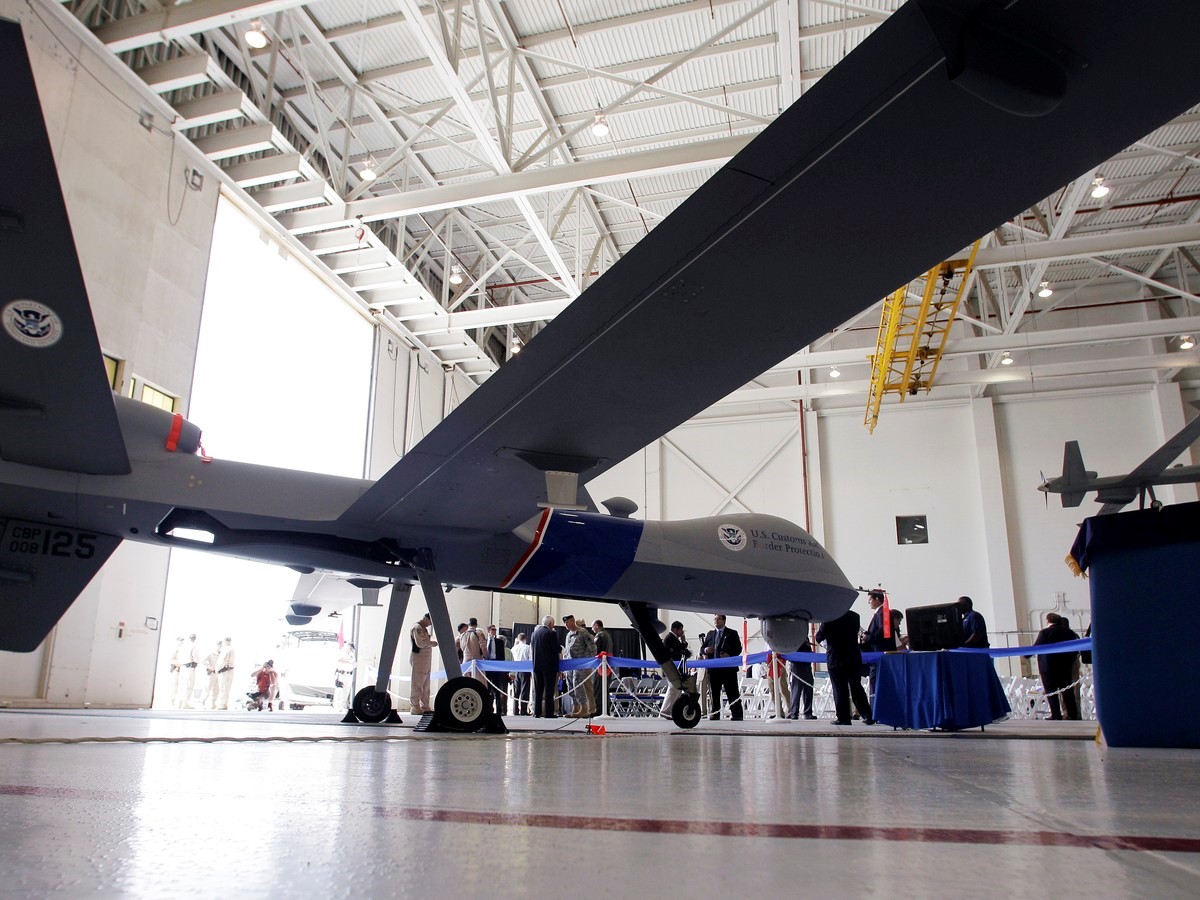
Along the Arizona–Mexico border, a 160-foot steel structure Autonomous Surveillance Tower (AST) 217 stands as part of a network of 472 fixed towers built by U.S. Customs and Border Protection (CBP) since 2017. Outfitted with high-resolution cameras, thermal imagers, and ground-sweeping radar, each tower monitors a 12-mile radius around the clock. When movement appears, artificial intelligence sorts the detection before an operator reviews it. In fiscal year 2025, these towers accounted for 68 percent of all apprehensions in the Tucson sector, highlighting how automation now drives U.S. border enforcement.
Over the Rio Grande, surveillance extends into the air. Tethered aerostats equipped with long-range radar can observe deep into northern Mexico. More influential, though, are MQ-9B Predator B drones. CBP’s fleet of 28 unmanned aircraft flew 11,400 hours in 2025 and identified more than 19,000 attempted crossings. Unlike fixed towers, drones reroute instantly, sending coordinates to agents within minutes. “We went from reacting hours later to intercepting in the act,” a senior Border Patrol official told reporters during an October tour of the Big Bend sector.
Related Articles: SYSTEMS & TECHNOLOGY – 3D PRINTING AND AFRICA’S DEFENCE INDUSTRY REVOLUTION
Similar systems are expanding overseas. Poland completed a 186-kilometer “smart wall” on its border with Belarus in 2024, pairing physical fencing with 220 observation towers and an integrated drone system. Lithuania added autonomous quadcopters that launch from charging stations on tower tops, guided by AI adapted from industrial robotics. When Belarus was accused of directing migrants toward EU borders between 2021 and 2023, these tools sharply reduced crossings; Polish officials reported a 94 percent drop in the first year of full operation.
Elsewhere, governments are turning to large-area aerial surveillance. Australia’s Operation Sovereign Borders now uses seven MQ-4C Triton maritime drones based in Darwin, each capable of monitoring millions of square miles in a single day. In the Mediterranean, Frontex’s 2025 budget includes €340 million for long-endurance Heron TP drones leased from Israel Aerospace Industries. The trend is clear: traditional walls remain symbolic and tactically useful, but the decisive layer of border control increasingly depends on data-driven monitoring from above.
The shift is not without controversy. In August 2025, the ACLU released thermal footage from a CBP drone showing agents chasing a family with young children in the Sonoran Desert at night. The video reignited debates about proportionality and the use of military-grade tools in immigration enforcement. Privacy advocates argue that tower sensors and drone cameras regularly sweep private ranches and Native American lands without warrants. A federal judge in Texas is now weighing whether persistent aerial monitoring constitutes an unreasonable search under the Fourth Amendment, particularly when AI is involved.
Cost is another point of contention. Each autonomous tower costs roughly $1.8 million to install and $400,000 a year to operate. The MQ-9B SeaGuardian runs about $32 million per aircraft, not including ground-control systems and satellite links. Congressional auditors project that CBP’s unmanned systems program will surpass $3.1 billion by 2030. Supporters say the investment is justified: the cost per apprehension has dropped sharply, from roughly $180,000 per migrant in 2019 to under $9,000 when drones assist.
Environmental impact is becoming harder to ignore. The Tohono O’odham Nation, whose reservation spans 62 miles of the Arizona border, reports that drone noise disrupts ceremonies and that tower lighting affects nocturnal insects vital to desert ecosystems. Along the Polish-Belarusian frontier, conservation groups have documented migratory birds striking tower cables. Manufacturers say upcoming models will operate more quietly and incorporate wildlife-detection sensors, but large-scale retrofits will take years.
As 2025 closes, the role of these technologies is increasingly evident. Surveillance towers and drones have not abolished borders, but they have redefined how states observe and manage them. Frontiers once monitored by scattered patrols are now covered by continuous detection networks that classify and relay movement in real time. Supporters describe the systems as essential for situational awareness and faster responses; critics see expanding surveillance with uncertain limits.
The broader question is not whether these tools work they clearly do but how societies choose to govern their use. The growth of automated border monitoring is reshaping long-standing ideas about privacy, sovereignty, and accountability. The devices will continue to multiply; the debate over who controls them, and under what rules, is only beginning.




Related Articles

INDUSTRY – DEFENCE PROCUREMENT SCANDALS IN AFRICA: LESSONS LEARNED
Defence procurement scandals have left a deep mark on Africa’s security landscape....

WOMEN IN DEFENSE INDUSTRIES: INNOVATORS, ENGINEERS, AND LEADERS
The global defense sector, long viewed as a male-dominated arena, is undergoing...
South Africa’s Arms Industry: Lessons for Continental Defence Sustainability
Once the undisputed leader of Africa’s defence manufacturing landscape, South Africa’s arms...


Offset Policies and Local Content in African Defence Procurement
As African governments spend billions on foreign military hardware, there is...
