


THE DAWN OF VIGILANT SKIES: AFRICA’S EMERGING AIRBORNE EARLY WARNING CAPABILITIES
 King Richard Igimoh, Group Editor ALOJanuary 15, 20263 Mins read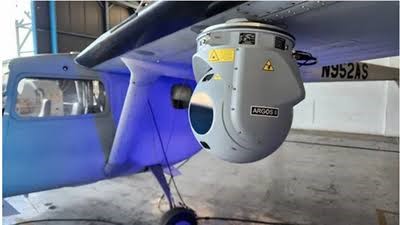
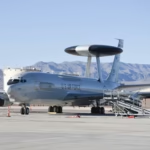
Africa’s airspace is undergoing a strategic transformation as a growing number of states invest in airborne early warning and control (AEW&C) systems. Once the preserve of major military powers, these radar-equipped aircraft are becoming central to how African nations monitor their skies, manage crises, and assert sovereignty. By extending detection ranges far beyond ground-based sensors and enabling real-time command and control, AEW&C platforms are reshaping air defence from a reactive posture into a coordinated, intelligence-driven capability.
For much of the post-independence era, African air forces relied heavily on fixed radar installations or external partners for aerial surveillance. Budget limitations, limited technical expertise, and competing security priorities slowed adoption. South Africa’s early experimentation with modified Boeing 707 platforms during the late apartheid years represented an exception rather than a trend, and those assets were retired after 1994 as defence spending declined. The absence of airborne surveillance left many states exposed to asymmetric threats, including unmonitored air corridors, maritime insecurity, and cross-border insurgent movements.
Related Articles: THE RISE OF AFRICAN AIRBORNE EARLY WARNING SYSTEMS
This began to change as economic growth, regional rivalries, and persistent security challenges pushed governments to modernise. Egypt emerged as the continent’s earliest and most consistent AEW&C operator, integrating Northrop Grumman E-2 Hawkeye aircraft into its air force in the 1980s. Operating primarily over the Mediterranean and Red Sea, the E-2C fleet has played a key role in early warning, fleet coordination, and joint exercises. Cairo’s ongoing pursuit of the more advanced E-2D variant reflects a desire to maintain technological relevance, improve electronic warfare resilience, and anchor its position as a regional military heavyweight.
In North-West Africa, Morocco has taken a different approach by acquiring Gulfstream G550 conformal airborne early warning aircraft. These business-jet-based platforms combine early warning with intelligence, surveillance, and reconnaissance functions, offering long endurance and multi-sensor integration. Their deployment strengthens Morocco’s monitoring of Western Sahara airspace and Atlantic approaches, while also signalling Rabat’s deeper defence ties with Israel and Western partners. Operational by the mid-2020s, the fleet has enhanced Morocco’s interoperability with NATO forces and elevated its aerospace profile.
Algeria, long focused on ground-based air defence and a strong fighter fleet, is also moving toward airborne early warning. Discussions with China on customised AEW&C solutions reflect Algiers’ intent to complement its Russian-built Sukhoi aircraft with extended situational awareness. For Algeria, such platforms are increasingly seen as essential amid instability in the Sahel and persistent tensions across its northern maritime boundaries. China’s involvement highlights a broader shift in Africa’s defence procurement landscape, where non-Western suppliers are offering competitive alternatives tailored to regional needs.
South of the Sahara, interest is growing but progress remains uneven. Nigeria, confronting both insurgency in its northeast and piracy in the Gulf of Guinea, has expanded its air force acquisitions but has yet to field dedicated AEW&C aircraft. Defence planners continue to assess platforms such as Saab’s GlobalEye or Embraer-based solutions as force multipliers for counterinsurgency and maritime security. South Africa, despite earlier capability withdrawals, is reconsidering airborne surveillance through partnerships and industrial collaboration as part of a broader reassessment of regional security responsibilities.
The drivers behind this shift are clear. Militant networks in the Sahel, contested maritime zones, interstate competition in North Africa, and climate-related instability all demand persistent situational awareness. For many governments, AEW&C systems offer not only military advantages but also a means of reducing reliance on foreign intelligence support. Investments in training, maintenance, and local industry participation further tie these platforms to long-term national capacity building.
Looking ahead, Africa’s expanding AEW&C footprint could improve peacekeeping coordination, border management, and disaster response. However, high acquisition costs, skills shortages, and supplier dependencies remain significant hurdles. If managed strategically, the gradual spread of these systems may, by the end of the decade, redefine how African states secure their airspace—less fragmented, more integrated, and increasingly self-directed.



Related Articles
AIR & AEROSPACE – AIR DEFENCE SYSTEMS IN AFRICA: AN UNFINISHED BUSINESS
By December 2025, Africa’s air defence picture remains uneven, shaped by rising...
AFRICAN AIR FORCES RISE TO THE FOREFRONT IN COUNTERTERRORISM OPERATIONS
Across the vast and volatile regions of Africa, air forces once limited...

THE SPACE RACE: AFRICA’S EMERGING AEROSPACE PROGRAMMES
Africa’s skies are no longer just a backdrop to other powers’ ambitions...


MILITARY HELICOPTERS IN AFRICAN OPERATIONS
Military helicopters have become important assets in African operations, offering unmatched versatility...
