

LAND & ARMY – AFRICA’S ELITE ARMY UNITS: WHO SETS THE STANDARD?
 King Richard Igimoh, Group Editor ALODecember 22, 20253 Mins read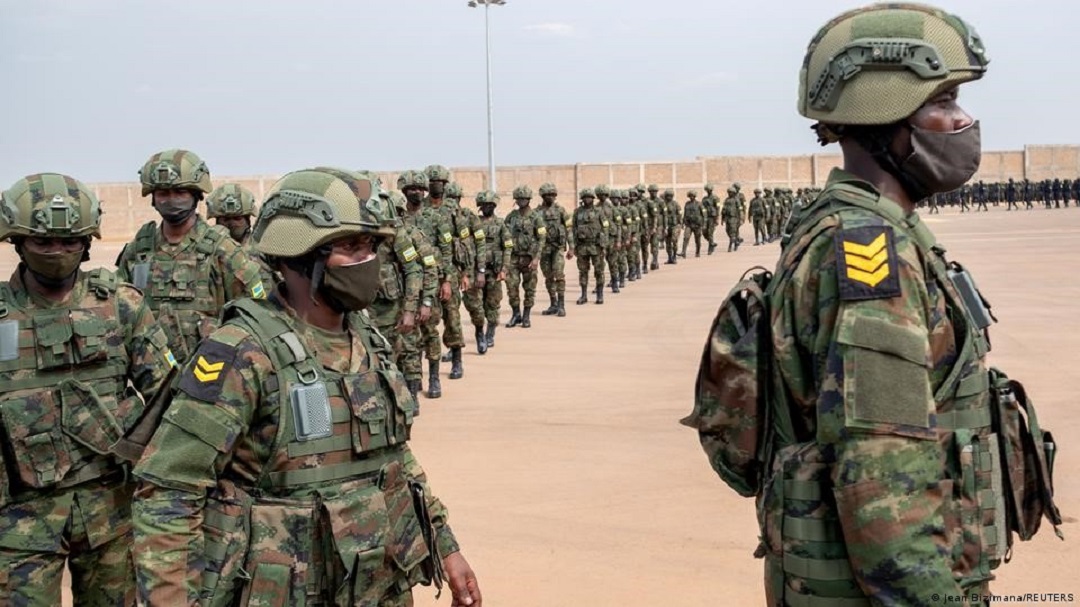
By late 2025, Africa’s elite army units stand at the sharp end of the continent’s security response. From counterinsurgency campaigns to border security and peace support operations, these formations carry out missions that demand speed, discretion, and technical skill. Measuring them is difficult: their operations are often classified, their mandates differ, and there is no single global ranking. Still, defence analysts and comparative indices consistently point to a small group of countries whose special forces have set benchmarks through rigorous selection, sustained combat experience, and strong international partnerships.
Egypt’s El-Sa’ka Forces commonly known as the Thunderbolt Forces are frequently cited as the continent’s most comprehensive elite formation. Founded in 1955, El-Sa’ka was built for unconventional warfare, deep raids, and strategic sabotage. Over decades, it has developed specialized units, including the well-known Unit 777 for counterterrorism and hostage rescue. Its operational record spans conventional warfare, most notably the 1973 Yom Kippur War, and more recent campaigns against militant groups in the Sinai Peninsula. Regular training with foreign partners has reinforced a doctrine that combines scale with precision, making El-Sa’ka a reference point for large, complex special operations in Africa.
Related Articles: THE NEW WATCHTOWERS: HOW SURVEILLANCE TOWERS AND DRONES BECAME CENTRAL TO MODERN BORDER CONTROL
South Africa’s Special Forces Brigade popularly called the Recces derives its reputation from a different tradition. Emerging from reconnaissance commandos of the 1970s, the unit refined its craft during prolonged bush warfare in southern Africa. Today, it remains focused on long-range reconnaissance, direct action, and counterinsurgency. The brigade is split between maritime specialists and airborne and land-focused units, reflecting its broad operational reach. Its selection process is among the most demanding globally, with only a small fraction of candidates completing training. That emphasis on endurance, navigation, and independent decision-making has made the Recces a model for adaptability, particularly in austere environments.
In North Africa, Algeria’s Special Intervention Group (GIS) is best known for its counterterrorism experience. Established in 1987, the unit came of age during Algeria’s internal conflict of the 1990s, developing hard-earned expertise in urban assaults, hostage rescue, and high-risk arrests. Although long constrained by limited access to advanced equipment, post-2001 cooperation with external partners expanded its technical capabilities. Analysts often highlight the GIS for its depth of operational experience in asymmetric warfare, which continues to shape special forces doctrine across the Maghreb.
Nigeria’s 72nd Special Forces Battalion reflects the pressures facing West Africa. Formed from a paratrooper base around 2010, the unit has been central to operations against Boko Haram and ISWAP. Operating in difficult terrain under constant threat, it conducts reconnaissance, raids, and unconventional warfare in support of broader joint task forces. International training and operational partnerships have strengthened its capabilities, while battlefield improvisation has driven tactical innovation. For many West African militaries confronting similar threats, the 72nd Battalion offers a practical example of special forces employment against jihadist insurgencies.
Morocco’s special operations units have gained prominence through their emphasis on rapid deployment and interoperability. Army paratrooper formations, gendarmerie elements, and air force special units train regularly with external partners, most visibly during large-scale exercises such as African Lion. This exposure has sharpened skills in airborne assaults, border security, and counter-extremism. While less battle-tested than some peers, Moroccan units are increasingly viewed as a regional standard-setter in training integration and joint operations.
Ethiopia’s Republican Guard represents a different model. Established in 2018, it serves primarily as a strategic protection force for senior leadership and critical institutions. Equipped with modern small arms and rotary-wing assets, the Guard incorporates special operations training focused on rapid response and internal security. Although its mandate is narrower than combat-oriented special forces, its structure reflects how some states are redefining elite units to meet internal stability challenges.
Beyond these established forces, newer formations are emerging. Rwanda’s expanding Special Operations Force, built through sustained training and regional deployments, signals a growing emphasis on professionalism and expeditionary capability. Multinational exercises such as Flintlock have further raised standards by exposing African units to common procedures, communications, and joint planning.
Ultimately, Africa’s elite army units are shaped less by prestige than by function. Those that set the standard share key traits: selective recruitment, realistic training, operational continuity, and the ability to adapt doctrine to local threats. As security challenges evolve, these forces are not only protecting national interests but also driving broader military reform across the continent.

Related Articles
URBAN WARFARE PREPAREDNESS IN AFRICAN CITIES
Africa’s cities are rapidly becoming central to the continent’s security challenges. With...
THE EVOLUTION OF AFRICAN INFANTRY WEAPONS from 1960
In the wake of widespread decolonization across Africa during the 1960s, newly...
Private Military Contractors in Africa – Mercenaries, Partners, or Spoilers?
In Africa’s security environment, one of the most polarising forces is the...


Urban Warfare Challenges for African Armies in a New Security Era
Across Africa, conflict is moving into the cities. From Mogadishu to Maiduguri,...
