



ARCTIC MILITARISATION: WHY AFRICA SHOULD PAY ATTENTION
 King Richard Igimoh, Group Editor ALOJanuary 29, 20263 Mins read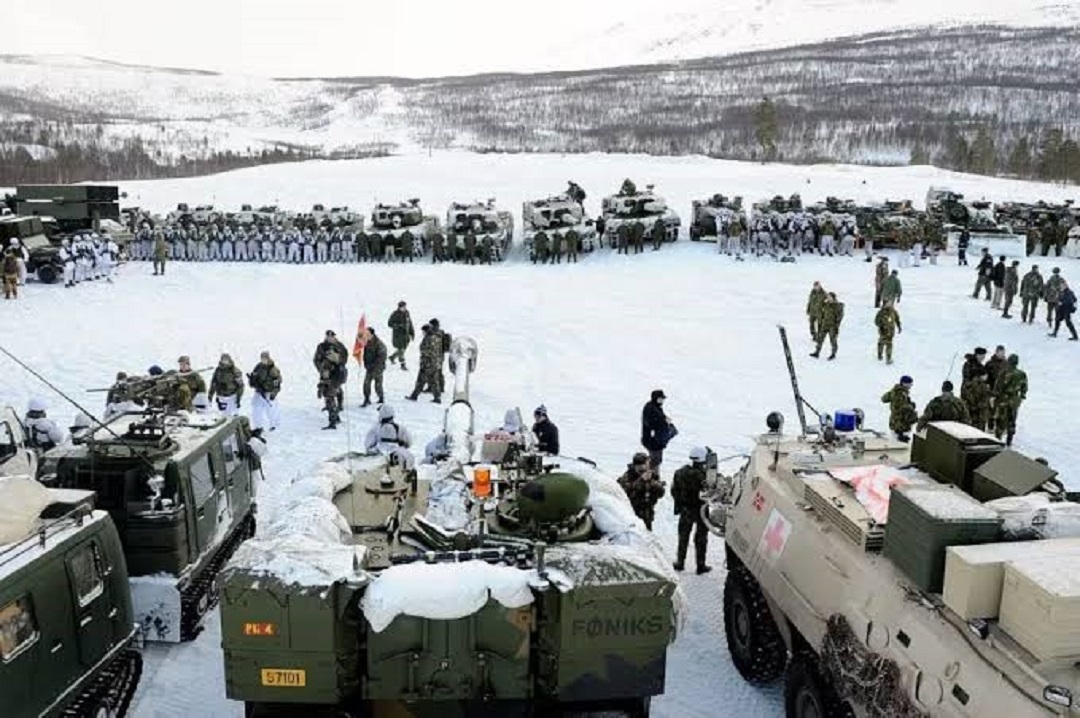
As Arctic ice retreats at record speed, the world’s northernmost region is undergoing a dramatic transformation. Once defined by isolation and scientific cooperation, the Arctic is fast becoming a focal point of geopolitical rivalry, as major powers expand military activity to protect emerging strategic and economic interests. Russia’s large-scale militarization marked by the reopening of dozens of Soviet-era bases and the deployment of advanced air and missile defense systems has prompted a forceful response from NATO and the United States. Washington’s updated Arctic Strategy, released in 2024, emphasizes expanded capabilities, deeper alliances, and more frequent joint exercises, signaling a decisive shift toward deterrence and competition.
Climate change sits at the heart of this transformation. Rapidly melting sea ice is opening previously inaccessible waters, allowing extended navigation along routes such as the Northern Sea Route, which could significantly shorten shipping times between Asia and Europe. At the same time, the Arctic is believed to hold vast reserves of oil, natural gas, and critical minerals essential for energy transition technologies. These economic prospects are drawing intense interest, blurring the line between commercial ambition and national security. Yet the same thaw that unlocks opportunity also heightens environmental risks, from fragile ecosystem damage to feedback loops that accelerate global warming, raising the cost of unchecked militarization.
Related Articles: AFRICA’S EXPANDING ROLE IN MULTINATIONAL MILITARY EXERCISES IN 2025
Russia currently dominates the Arctic’s military landscape. Viewing the region as central to both its economic future and strategic defense, Moscow has invested heavily in bases, radar networks, and nuclear-capable forces designed to secure its northern flank and control key maritime corridors. In response, the United States has increased its Arctic focus through surveillance upgrades, renewed investment in icebreaker fleets, and closer coordination with allies. NATO, strengthened by Nordic expansion, has stepped up exercises and planning for Arctic contingencies. Meanwhile, China despite lacking Arctic territory has declared itself a “near-Arctic state,” funding research stations, ice-capable vessels, and logistics infrastructure that many analysts see as laying the groundwork for future strategic leverage.
Recent developments point to an accelerating cycle of action and reaction. Since 2023, Russia has intensified its military posture in the High North, while Western governments have elevated the Arctic within national defense strategies, particularly following the breakdown of cooperation after Russia’s invasion of Ukraine. The paralysis of the Arctic Council, once a pillar of regional collaboration, underscores how geopolitical tensions have spilled into a space long governed by consensus. Analysts warn that climate stress and political rivalry could further entrench militarization in the years ahead, with consequences extending far beyond the polar circle.
From a global security perspective, the Arctic’s growing militarization introduces new risks. Narrow maritime passages could become flashpoints between nuclear-armed states, while the spread of hybrid tactics cyber operations, disinformation, and gray-zone pressure adds complexity to deterrence and crisis management. These trends reflect broader shifts in the international system, including weakened multilateral institutions and intensifying competition among major powers, making the Arctic a testing ground for future global order.
Economic stakes are equally high. New shipping lanes could reshape global trade patterns, while competition over energy and minerals may introduce volatility into already fragile markets. At the same time, militarization could lead to restrictions, tolls, or disruptions that undermine the very efficiencies these routes promise. Environmental damage from extraction poses additional long-term costs, compounding climate vulnerabilities worldwide.
Africa, though far from the Arctic, is not insulated from these developments. Accelerated ice melt contributes to rising sea levels that threaten African coastal cities and amplifies extreme weather across the continent. Geopolitical rivalry in the Arctic may also reverberate through global commodity markets, affecting prices for oil and minerals critical to African economies. Moreover, overlapping interests particularly China’s engagement in both Arctic and African infrastructure could influence investment patterns and strategic alignments in the Global South.
For African policymakers, the Arctic’s transformation offers a cautionary lesson about the interconnected nature of climate change and security. By tracking these distant but consequential shifts, and advocating for inclusive diplomacy through platforms such as the African Union, African states can better anticipate risks, protect their interests, and navigate an increasingly multipolar world shaped by forces far beyond their shores.

Related Articles
BATTLEFIELD COMMUNICATION SYSTEMS IN AFRICAN ARMIES
Battlefield communication has become one of the most critical determinants of military...


THE RISE OF ELECTRONIC SURVEILLANCE IN AFRICAN MILITARIES
African militaries are rapidly expanding their use of electronic surveillance as they...

HOW COLONIAL RULE SHAPED AFRICA’S MODERN MILITARIES
Africa’s contemporary military institutions are deeply rooted in structures created during colonial...
AFRICA’S EXPANDING ROLE IN MULTINATIONAL MILITARY EXERCISES IN 2025
In 2025, Africa became a central stage for multinational military cooperation, reflecting...