



AFRICA’S DEFENCE INDUSTRIES AT A TURNING POINT
 King Richard Igimoh, Group Editor ALODecember 12, 20253 Mins read
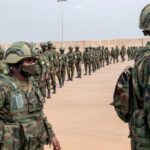
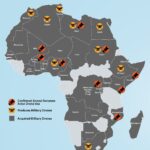
Africa’s defence industries stand at a critical moment. Although the continent spends over $40 billion annually on arms procurement, less than 2% of that amount goes to local manufacturers, with most purchases sourced from suppliers in Europe, North America, Russia, China, and increasingly Türkiye and Israel. This imbalance has prompted a growing coalition of African leaders, military officials, and industrialists to push for stronger domestic defence production. From South Africa’s established firms to emerging manufacturers in Nigeria, Algeria, Ethiopia, and Egypt, the message is the same: Africa must transform its defence spending into industrial capacity, skilled jobs, and strategic autonomy.
Yet the obstacles remain significant. Defence budgets in most African countries are modest by global standards, with Algeria, Nigeria, South Africa, Egypt, and Morocco accounting for the lion’s share of military expenditure. Chronic underinvestment has left major state-owned enterprises such as South Africa’s Denel and Egypt’s Arab Organization for Industrialization with ageing equipment, talent shortages, and inconsistent procurement pipelines. Private-sector participation is even more limited. High perceived risk, long project payback periods, and a lack of patient capital discourage banks and investors. Foreign partners also impose export controls that restrict the development of fully indigenous weapons systems.
Related Article: Why General C.G. Musa Is the Right Defence Minister for Nigeria—Right Now
Governance challenges further complicate matters. Corruption scandals from South Africa’s 1990s Arms Deal to more recent controversies in Nigeria have made international lenders and co-production partners cautious. Offset policies, which require foreign suppliers to invest back into the buyer’s economy, often provide training or assembly facilities rather than meaningful technology transfer. As a result, many African militaries operate advanced imported platforms that they cannot sustainably repair, maintain, or modernise without foreign assistance. This creates long-term dependencies that undermine strategic autonomy.
Despite these difficulties, opportunities for growth are emerging across the continent. The African Union’s Silencing the Guns initiative and various national industrialisation policies increasingly emphasise local content. South Africa’s Defence Industry Strategy 2030, Nigeria’s updated Defence Industry Corporation Act, and Egypt’s Vision 2030 all aim to expand domestic production. Algeria has quietly become the continent’s largest arms producer by revenue, leveraging hydrocarbon wealth and long-term partnerships with Russia. Ethiopia’s accelerated investment in defence facilities following the Tigray conflict highlights rising ambitions in the Horn of Africa.
Financing models are also evolving. Development finance institutions such as the African Development Bank and the African Export-Import Bank (Afreximbank) have introduced defence and security financing windows, recognising the sector’s potential to drive broader industrial development. Public-private partnerships are increasing. South Africa’s Paramount Group and Aerosud have attracted investment from Gulf and European entities, while Nigeria’s Proforce has gained support from pension funds and diaspora bonds. Joint ventures and special-purpose vehicles with Middle Eastern and Asian partners are enabling technology transfers that traditional Western suppliers often restrict.
Regional cooperation offers further promise. ECOWAS and the East African Community have discussed pooled procurement arrangements and shared manufacturing sites solutions that could provide economies of scale for smaller defence markets. Over time, the African Continental Free Trade Area (AfCFTA) may reduce tariffs on intra-African defence products, turning fragmented national markets into a single continental ecosystem. Rwanda and Kenya are already positioning themselves as maintenance, repair, and overhaul (MRO) hubs for both military and civilian aviation, demonstrating how service-oriented niches can complement manufacturing.
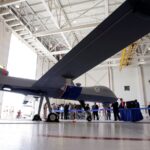
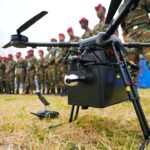
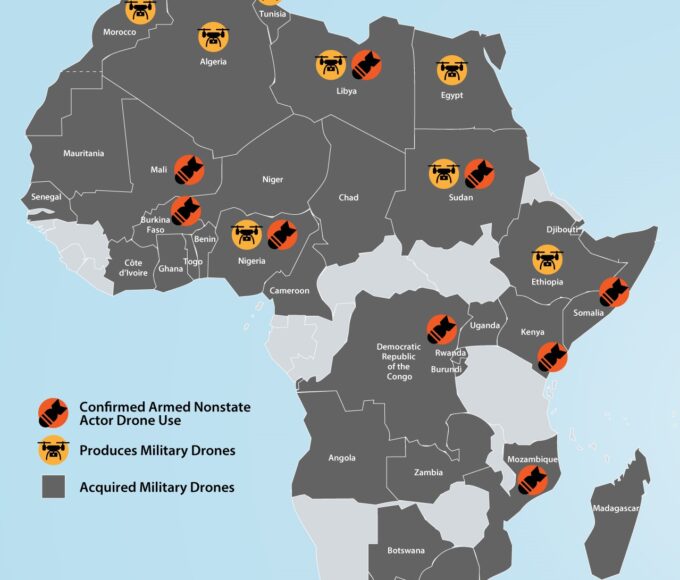
Meanwhile, dual-use technologies are reshaping the sector. Investments in drones, cybersecurity, satellite systems, and armoured vehicles often begin in civilian industries such as agriculture, mining, and telecommunications before expanding into defence applications. Firms like Nigeria’s AVIS and Uganda’s Luwero Industries are building technical expertise through commercial contracts and later repurposing those capabilities for military clients. Chinese and Turkish companies, operating with fewer end-user restrictions, have become influential partners by offering affordable production lines, technology sharing, and co-development opportunities.
For Africa’s defence industries to shift from ambition to reality, deliberate long-term policy decisions are essential. These may include sovereign defence funds supported by natural-resource revenues, mandatory local-content requirements in large procurement programs, and continental certification standards to streamline production and reduce duplication. Above all, governments must view defence industrialization as a strategic national asset akin to energy, transportation, or digital infrastructure rather than a series of short-term purchases.
When effectively financed and governed, Africa’s defence sector can evolve into a powerful engine of technological advancement, industrial capability, and national security. South Africa demonstrated this potential in the 1980s, and Egypt is rebuilding it today. With coordinated effort and sustained commitment, the continent can develop the capacity to design, manufacture, and export sophisticated defence systems strengthening stability while securing greater strategic independence in an increasingly unpredictable world.




Related Articles
BEST DEFENCE POLICY PAPERS ON AFRICA IN THE LAST DECADE
Between 2016 and 2026, defence policy thinking on Africa shifted in response...
BEST DEFENCE POLICY PAPERS ON AFRICA IN THE LAST DECADE
Between 2016 and 2026, defence policy thinking on Africa shifted in response...
THE ALGERIAN WAR OF INDEPENDENCE: TACTICAL LESSONS
The Algerian War of Independence (1954–1962) remains one of the most instructive...


DEFENCE MINISTERS’ MEETINGS: OUTCOMES THAT MATTER
As geopolitical pressures intensified in 2025, defence ministers’ meetings shifted from routine...
