

Somalia’s Security Reset: Reforming Forces, Crushing Extremism
 admag_adminApril 28, 20263 Mins read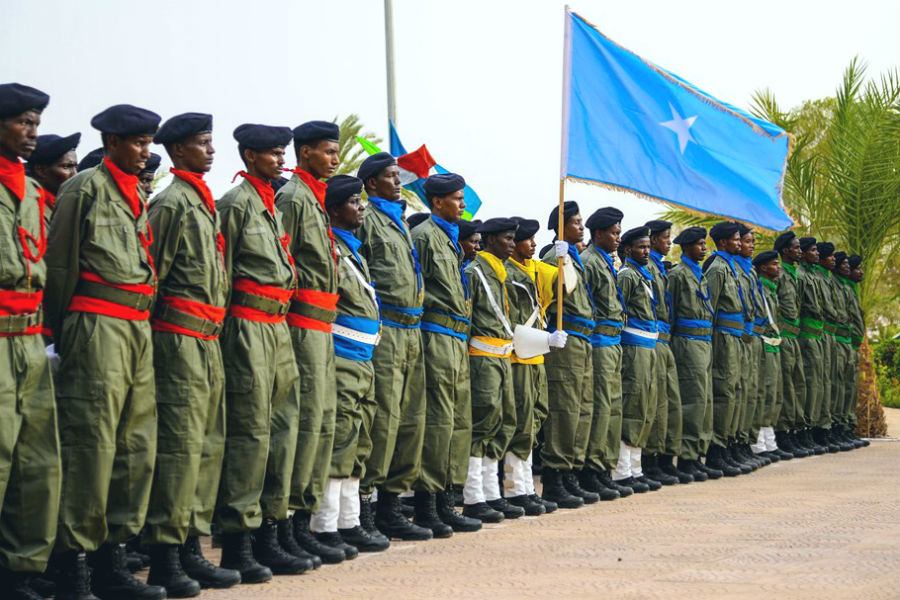
Somalia is entering a decisive phase in its long struggle for stability, launching an ambitious effort to rebuild its security institutions, restore government authority and confront entrenched extremist threats. After decades of civil conflict, institutional collapse and insurgent violence, the country is pursuing a more unified strategy aimed at reclaiming control and strengthening national resilience.
The roots of Somalia’s insecurity lie in the collapse of central authority in 1991, an event that plunged the country into prolonged conflict and political fragmentation. In the absence of a functioning state, clan militias and armed groups expanded their influence, creating the conditions for extremist organisations such as Al-Shabaab to rise and entrench themselves across key regions.
Over the years, Al-Shabaab has evolved into one of the most dangerous militant organisations in the Horn of Africa, carrying out bombings, assassinations and coordinated attacks on civilians, state institutions and peacekeeping forces. Its ability to exploit weak governance structures and generate revenue through extortion, illegal taxation and control of transport routes has made it a persistent obstacle to national stability.
To confront this challenge, the Somali government has initiated a broad security overhaul centred on rebuilding the Somali National Army and restoring territorial control. Supported by international partners, this effort prioritises the recruitment, training and professionalisation of military personnel, while strengthening the operational capacity of state security institutions.
A major focus of the reform agenda is improving coordination between federal and regional forces. Somalia’s fragmented security architecture has historically weakened military effectiveness, but new efforts to unify command systems, improve intelligence sharing and enhance joint operations are beginning to improve the country’s response capability.
International backing remains vital to these reforms. The African Union Transition Mission in Somalia has played an important role in counter-terrorism operations, infrastructure protection and stabilisation efforts. Although responsibilities are gradually being transferred to Somali authorities, continued external support has been essential in sustaining military pressure on extremist networks.
Military offensives against Al-Shabaab have intensified in recent years, especially in southern and central Somalia where the group once exercised strong territorial control. Joint operations involving Somali forces and local militias have led to the recovery of strategic towns and supply corridors, weakening the militants’ operational reach and disrupting logistics networks.
Despite these gains, the threat remains fluid. Al-Shabaab has adapted by shifting from territorial occupation to asymmetric warfare, relying on roadside bombs, guerrilla tactics and urban attacks. This has forced Somali security forces to adopt more intelligence-driven strategies and deepen cooperation with local communities.
Military reform alone, however, cannot secure lasting peace. Somalia’s authorities are also working to restore public trust by expanding governance structures and improving service delivery in reclaimed areas. For years, weak institutions and limited state presence created openings for extremist groups to win influence. Re-establishing administrative authority is therefore central to long-term stability.
Economic recovery is another essential pillar of Somalia’s security strategy. Widespread unemployment, particularly among young people, has long fuelled recruitment into armed groups. To address this, stabilisation efforts increasingly include programmes focused on job creation, vocational training and infrastructure development, recognising that economic opportunity is a key defence against extremism.
Regional cooperation has also become more important in tackling insecurity. Somalia is strengthening border control mechanisms and working closely with neighbouring countries such as Kenya and Ethiopia to curb the movement of weapons, fighters and illicit networks across porous borders.
Yet formidable challenges remain. Resource shortages, institutional fragility and persistent insurgent activity continue to slow reform efforts. In many rural areas, difficult terrain and limited infrastructure make it hard for the government to maintain a stable presence, leaving communities vulnerable to militant influence.
The humanitarian impact of insecurity also remains severe. Years of violence have displaced millions, leaving many communities dependent on humanitarian aid while limiting access to healthcare, education and food supplies. Without improvements in civilian conditions, military gains may prove difficult to sustain.
Even so, Somalia’s current reforms mark a significant shift in the country’s security trajectory. By combining military modernisation, institutional rebuilding and international cooperation, the government is gradually strengthening its capacity to confront extremism and reassert national authority.
In the end, Somalia’s security reset is more than a military campaign; it is a broader effort to rebuild the foundations of the state. The road ahead remains difficult, and extremist threats are far from eliminated, but the reforms underway offer a meaningful opportunity to restore stability, strengthen governance and move the country towards long-term recovery.
- African Security
- African Union
- Armed Forces
- Conflict Resolution
- Counterinsurgency
- Counterterrorism
- Defense Policy
- Extremism
- governance
- Here are 20 strong
- Horn of Africa
- Military Reform
- National Security
- Peacebuilding
- Regional Security
- relevant tags you can use for your post
- Security Reform
- Security Reset
- Security Strategy
- separated by commas: Somalia
- Stability
- Terrorism
Related Articles
Mozambique’s Energy Shield: Defending LNG Assets Against Insurgent Threats
Mozambique is intensifying efforts to protect its growing liquefied natural gas (LNG)...
Nigeria’s North-West Offensive: Restoring Security and Reclaiming Communities
Nigeria’s North-West has remained one of the country’s most fragile security zones...

Kenya’s Smart Borders: Using AI to Fight Crime and Secure Trade
Kenya is increasingly deploying artificial intelligence and digital technologies to strengthen border...


STRATEGIC PLANNING MANUALS EVERY LEADER SHOULD STUDY
strategic planning, leadership development, business strategy, executive leadership, organisational growth, decision making,...

Leave a comment