



BATTLEFIELD COMMUNICATION SYSTEMS IN AFRICAN ARMIES
 King Richard Igimoh, Group Editor ALOFebruary 2, 20263 Mins read
 Battlefield communication has become one of the most critical determinants of military performance on the continent. Modern operations against insurgent groups, transnational criminal networks, and asymmetric threats rely on secure, continuous information flows linking commanders, frontline units, and partner forces. As a result, many African militaries are phasing out aging radio networks in favor of software-defined systems, satellite communications, and integrated command platforms that can function across vast and hostile terrain. Investments by countries such as Nigeria and South Africa reflect a growing recognition that effective communications are no longer a support function but a core operational capability, particularly as joint operations and electronic warfare risks become more common.
For decades, African militaries operated communication systems shaped by colonial legacies and designed primarily for internal security rather than large-scale or joint operations. In the years following independence, many forces depended on basic high-frequency radios and fixed landlines, tools that proved insufficient during prolonged conflicts such as the South African Border War and, later, insurgencies across the Sahel. By the early 2000s, exposure to global advances in digital warfare prompted a gradual transition toward very-high- and ultra-high-frequency systems and satellite communications, better suited to overcoming distance and terrain. Operations in Somalia and the Democratic Republic of Congo highlighted the cost of fragile networks, reinforcing the need for more resilient and adaptable communication infrastructure despite persistent budget constraints.
Related Articles: BENEATH THE SURFACE: AFRICA’S UNDERSEA CABLES AND RISING NATIONAL SECURITY RISKS
Today, African battlefield communications rest on a mix of established and emerging technologies. Tactical radios support both voice and data transmission, while encrypted data links protect command traffic from interception. Software-defined radios offer flexibility, allowing forces to shift frequencies and counter jamming attempts in contested environments. High-frequency systems remain indispensable for long-range communication in remote areas with limited infrastructure.
South Africa has emerged as a continental leader in this domain. The South African National Defence Force has advanced a fully integrated tactical communication system through partnerships with local firm Reutech Communications. Designed to operate seamlessly across land, air, and maritime forces, the system incorporates digital voice, strong encryption, and interoperability without the need for gateways. Thousands of software-defined radios have already been deployed in operational settings, including peacekeeping missions in the Democratic Republic of Congo. With development nearing completion and production contracts in place, the programme highlights the strength of South Africa’s domestic defence industry, particularly in electronic warfare and communications.
Elsewhere, major regional powers are accelerating upgrades. In West Africa, Nigeria has prioritized battlefield communications as part of its counter-insurgency strategy. The Army Signals Corps has introduced modern encryption solutions and expanded training at the Nigerian Army School of Signals to improve management of radio and satellite networks. While funding constraints limit the integration of advanced computing systems, the focus on secure communications has strengthened operational coordination. In North Africa, Egypt has partnered with international firms to enhance satellite capabilities and deploy integrated C5ISR platforms, improving border surveillance and centralized command across its forces.
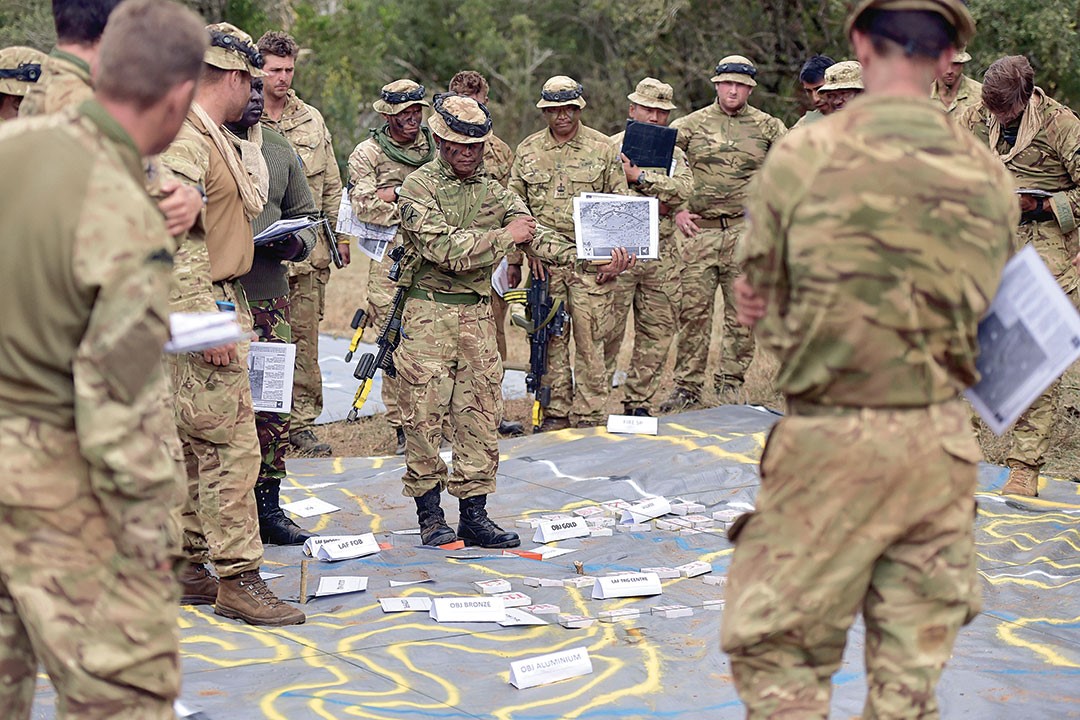
Interoperability across national lines remains a strategic objective. The Africa Endeavor exercises, supported by U.S. Africa Command since 2006, have brought together dozens of African militaries to test communication compatibility during simulated crises. These exercises, conducted in cooperation with the African Union, help standardize procedures, address language and technical barriers, and improve coordination during peacekeeping and humanitarian operations. For many participants, they provide rare opportunities to test systems in multinational environments.
Africa’s diverse geography ranging from dense forests to deserts and mountain ranges continues to disrupt signals. Unreliable power supplies and dependence on foreign technology introduce vulnerabilities, while cyber threats and electronic warfare risks are growing. Adaptive tools such as automatic link establishment in high-frequency radios, combined with local training and redundancy planning, have helped mitigate some of these constraints. Recent conflicts elsewhere have further underscored the need for protected networks resilient against jamming and cyber intrusion.
African militaries are exploring the integration of artificial intelligence for predictive analysis and enhanced intelligence processing, alongside expanded use of drones and secure digital networks. Efforts to strengthen domestic production and regional partnerships aim to reduce reliance on external suppliers. If matched with sustained investment and responsible governance, advances in battlefield communications could significantly reshape operational effectiveness and contribute to greater security and stability across the continent.




Related Articles
Uganda–DR Congo Joint Offensive Targets Rebel Networks
Uganda and the Democratic Republic of the Congo are intensifying joint military...

Ethiopia’s Defence Upgrade: Reinforcing Air Power Against Emerging Threats and Redefining Regional Deterrence
Ethiopia is entering a decisive phase in its military transformation, placing renewed...
ARCTIC MILITARISATION: WHY AFRICA SHOULD PAY ATTENTION
As Arctic ice retreats at record speed, the world’s northernmost region is...


THE RISE OF ELECTRONIC SURVEILLANCE IN AFRICAN MILITARIES
African militaries are rapidly expanding their use of electronic surveillance as they...
