



URBAN WARFARE PREPAREDNESS IN AFRICAN CITIES
 King Richard Igimoh, Group Editor ALOJanuary 12, 20263 Mins read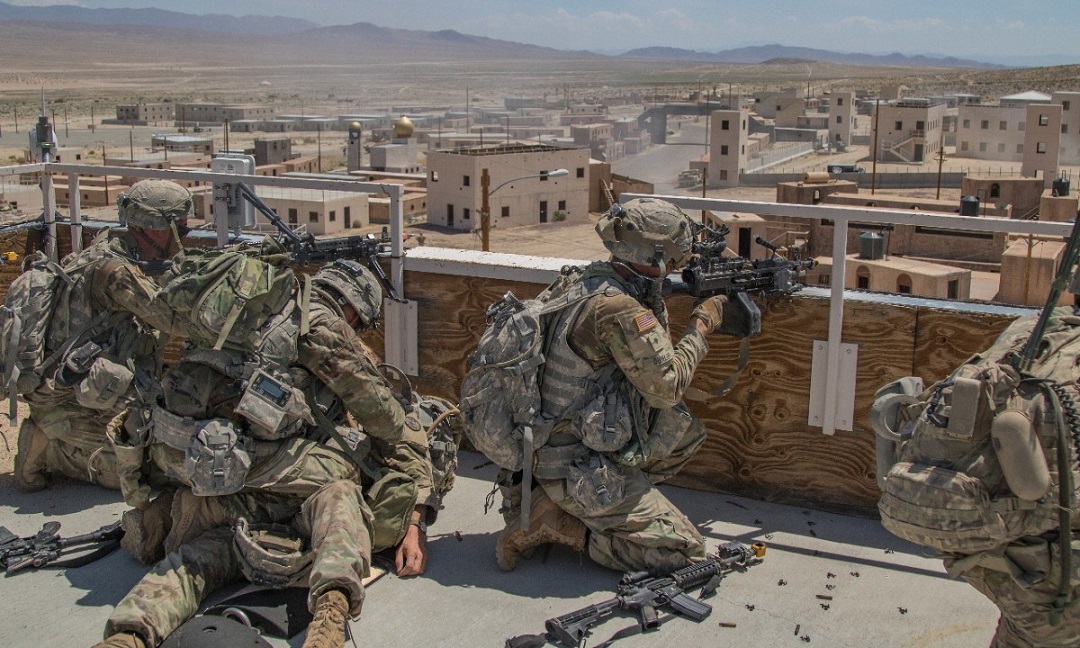
Africa’s cities are rapidly becoming central to the continent’s security challenges. With the urban population projected to approach 1.5 billion by 2050 and more than 40 percent of Africans already living in cities, conflict is increasingly unfolding in dense, civilian-heavy environments. Insurgent groups, criminal networks, and militias are exploiting high-rise buildings, informal settlements, and congested transport corridors to offset the conventional advantages of state forces. For land armies largely designed for rural or border-based operations, the shift has exposed critical gaps in doctrine, training, and equipment.
Urban warfare presents problems that conventional manoeuvre tactics struggle to solve. Restricted visibility, limited mobility, and the constant presence of civilians complicate intelligence gathering and decision-making. Armed groups blend into neighborhoods, use elevated positions for surveillance and fire, and rely on improvised defenses that slow or trap advancing troops. For military planners, the challenge is not simply defeating adversaries, but doing so without triggering mass displacement, infrastructure damage, or long-term political backlash.
Related Articles: Urban Warfare Challenges for African Armies in a New Security Era
Past conflicts have made these weaknesses difficult to ignore. The 1993 Battle of Mogadishu demonstrated how lightly equipped fighters, operating in a hostile urban environment, could disrupt a technologically superior force. More recent fighting in Sahelian towns and cities has reinforced the lesson: armies trained for open terrain struggle when confronted with close-quarters combat, fragmented intelligence, and complex civilian dynamics. In several cases, prolonged urban engagements have resulted in high casualties and limited strategic gains.
Recognizing these constraints, some African militaries have begun to adjust. Kenya and Tanzania regularly host multinational exercises such as Justified Accord, where troops train in simulated urban settings that emphasize building clearance, coordinated infantry movement, and rapid response to evolving threats. These drills stress precision and restraint, reflecting an understanding that success in cities depends as much on discipline and judgment as on firepower. Interoperability with regional partners is also a priority, given the cross-border nature of many urban security threats.
Investment in dedicated infrastructure remains uneven but is slowly expanding. Senegal’s planned urban combat training facility, backed by significant external funding, is designed to replicate city blocks and fortified positions, offering troops realistic preparation for operations in populated areas. South Africa and Nigeria have also revised aspects of their doctrines to include urban operations, drawing lessons from peacekeeping deployments in cities within the Democratic Republic of Congo and elsewhere. These experiences have highlighted the importance of combined arms coordination and intelligence-driven planning.
Despite these efforts, major obstacles persist. Civilian protection remains the most complex challenge. Dense populations mean that military targets are often located near homes, schools, and hospitals. Many African armies lack persistent surveillance platforms, such as tactical drones, that could improve situational awareness and reduce reliance on heavy firepower. Non-lethal options and precision-guided systems are also limited, increasing the risk of collateral damage and undermining public confidence in security forces.
External partnerships continue to shape preparedness, but not without controversy. U.S.-led programmes like Flintlock provide valuable tactical training, yet critics argue they focus narrowly on counterterrorism rather than the broader demands of urban security, including policing coordination and post-conflict stabilization. European and Chinese engagements supply equipment and simulation tools, but their long-term effectiveness depends on how well they are integrated into national defence strategies rather than treated as stand-alone interventions.
Looking forward, the pressures on African cities are expected to intensify. Militant groups are increasingly launching operations in urban centers, while the spread of inexpensive drones and encrypted communications has lowered the barriers to organized violence. Recent analyses warn that adversaries are adapting faster than state forces, particularly in intelligence fusion and community-level influence. Without stronger links between military planning, local governance, and urban development, tactical improvements may have limited strategic effect.
Urban warfare preparedness is no longer a niche concern but a core requirement for land forces across the continent. Training exercises and doctrinal revisions mark progress, but they will not suffice on their own. Sustainable readiness depends on consistent funding, accountable leadership, and closer coordination with civilian authorities responsible for city management. As African cities continue to expand, the ability of armies to operate effectively and responsibly within them will increasingly shape both security outcomes and public trust.





Related Articles
Uganda–DR Congo Joint Offensive Targets Rebel Networks
Uganda and the Democratic Republic of the Congo are intensifying joint military...
Nigeria’s Intelligence Offensive: Strengthening Regional Defences Against Bandit Networks
Across Nigeria’s forests, rural highways, and fragmented border regions, a new form...
Nigeria’s North-West Offensive: Restoring Security and Reclaiming Communities
Nigeria’s North-West has remained one of the country’s most fragile security zones...


MILITARY HISTORY – PEACE ENFORCEMENT MISSIONS IN AFRICA
Since the end of the Cold War, Africa has become the principal...
